PS1
E&S risk assessment and management
Structured ESMS, ESIA and ESMP under preparation, operational risk matrix.

Our ESG approach
IFC Performance Standards 1 to 8 · Operational ESMS · Active grievance mechanism · Measurable impact indicators.
Formal commitment — Executive Management
Zeideal Group SAS formally commits to operating the PROAQUI project in strict compliance with the International Finance Corporation (IFC) Performance Standards 1 to 8, the principles of the United Nations Global Compact (accession process under way), the UN Sustainable Development Goals relevant to our activities, and the applicable Cameroonian and OHADA regulatory frameworks.
This commitment translates into an operational Environmental and Social Management System (ESMS), a grievance mechanism accessible to stakeholders, an annual ESG report audited by an international firm, and an internal culture of transparency and accountability.
— The Executive Management, ZEIDEAL GROUP SAS.
IFC Performance Standards
IFC Performance Standards 1 to 8 are the global benchmark for environmental and social risk management in industrial projects. PROAQUI applies them in an integrated and auditable manner.
PS1
Structured ESMS, ESIA and ESMP under preparation, operational risk matrix.
PS2
Social rights compliant with Cameroon's Labour Code, HSE training, ISO 45001 certification target by Year 5.
PS3
FCR controlled at 1.30 from Phase 1 (premium imported feed). Integrated water management (5.8M m³/year). 60% solar energy mix target.
PS4
Continuous riparian consultation. Social-infrastructure beneficiaries at full capacity (Year 10).
PS5
DIR land granted by the State (land title). No involuntary displacement.
PS6
Lake/river impact study. GIFT strain non-invasive. Buffer zones and ecological corridors preserved.
PS7
Not applicable on the operational perimeters DIR, Mbakaou, Nyong (anthropological analysis conducted).
PS8
Chance-find protocol integrated into the environmental action plan. Active archaeological monitoring.
Measurable impact indicators
All indicators below are drawn from the official Business Plan. They are subject to internal quarterly reporting and annual publication in the audited ESG Report.
| Category | Indicator | Year 10 target (Phase 4) |
|---|---|---|
| Climate | GHG emissions Scope 1+2+3 vs imported frozen fish | −42% |
| Energy | Solar energy mix | 60% |
| Water | Water withdrawn and returned | 5.8 M m³/year |
| Biodiversity | Major ecological incidents | 0 |
| Employment | Direct filière workforce | 2,017 FTE |
| Employment | Consolidated employment impact | 4,800 to 6,200 FTE |
| Inclusion | Women in workforce | 30% |
| Inclusion | Youth (< 35) in workforce | 40% |
| Inclusion | Local Cameroonian managers | 90% |
| Communities | Social-infrastructure beneficiaries | 60,000 |
| Communities | Contracted producers | 3,000 |
| Safety | LTIF (Lost Time Injury Frequency) | < 2.0 |
| Governance | Women on Board | 33% |
| Governance | Independent directors | 22% |
| Grievances | Grievance handling time | 100% < 30 days |
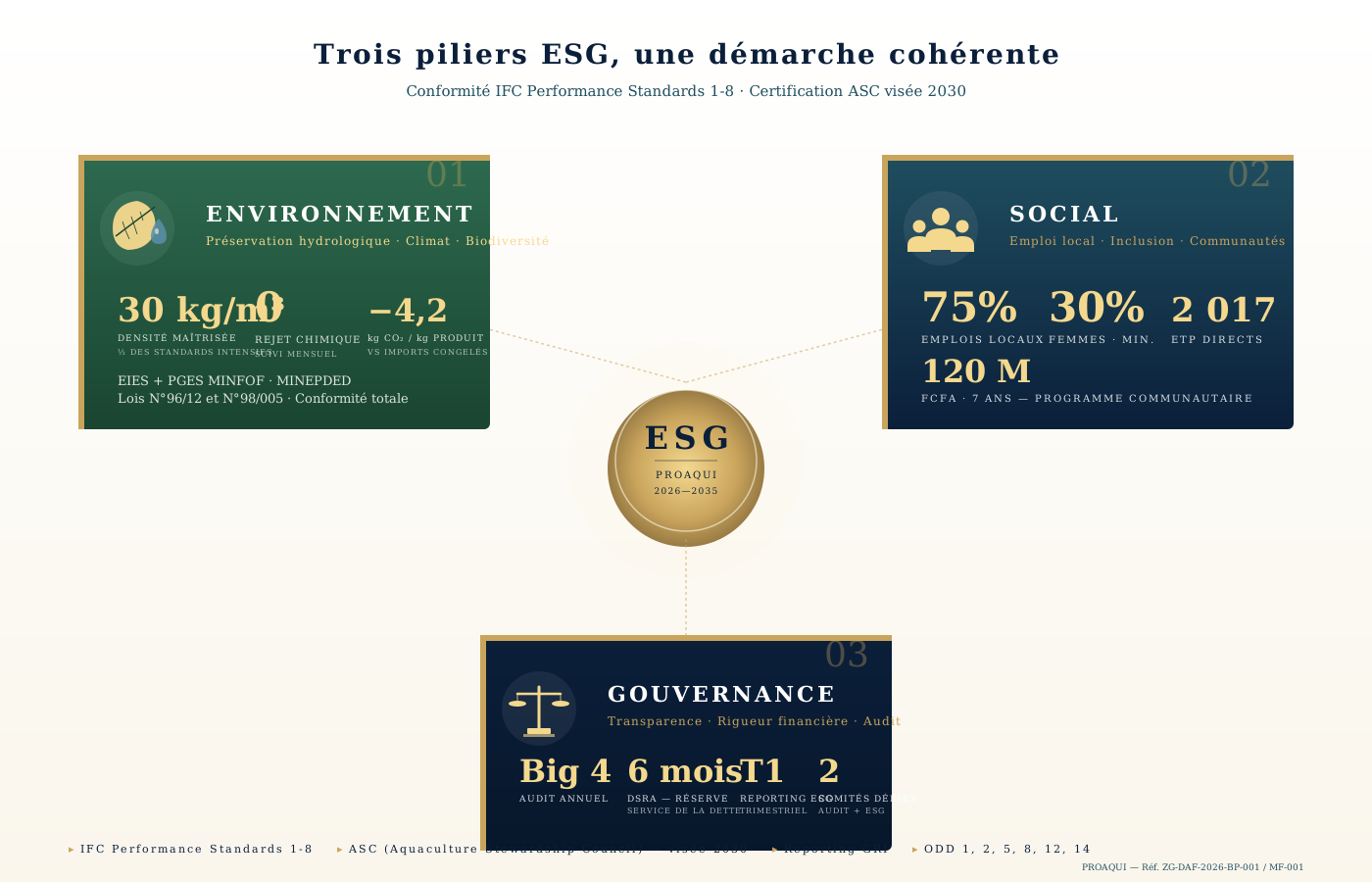
The three ESG pillars
PROAQUI's ESG commitments rest on the three universal pillars — environmental, social and governance — set out below for the project and aligned with the IFC Performance Standards and the AfDB Operational Safeguards.
E — Environmental
S — Social
G — Governance
Grievance mechanism (PS1)
Any stakeholder — employee, supplier, riparian community, NGO, authority — can submit a grievance to Zeideal Group via three distinct channels:
Response commitment: within 30 working days. Anonymity possible. The grievance mechanism is overseen by the ESG Committee and is the subject of quarterly reporting to the Presidency.